
Whether our pupils are enjoying interactive language lessons, developing core skills in sport, or practising mathematical equations, the curriculum at Fairfield is designed to be broad and balanced, offering opportunities for stretch and challenge.
Making up a significant part of this varied curriculum is our commitment to outdoor learning, especially in the Early Years. The globally celebrated International Day of Education recognises the role that education plays towards reaching sustainable development goals and at Fairfield, we believe that igniting a passion for the environment in the early stages of a child’s journey through school fosters a lifelong love of outdoor learning.
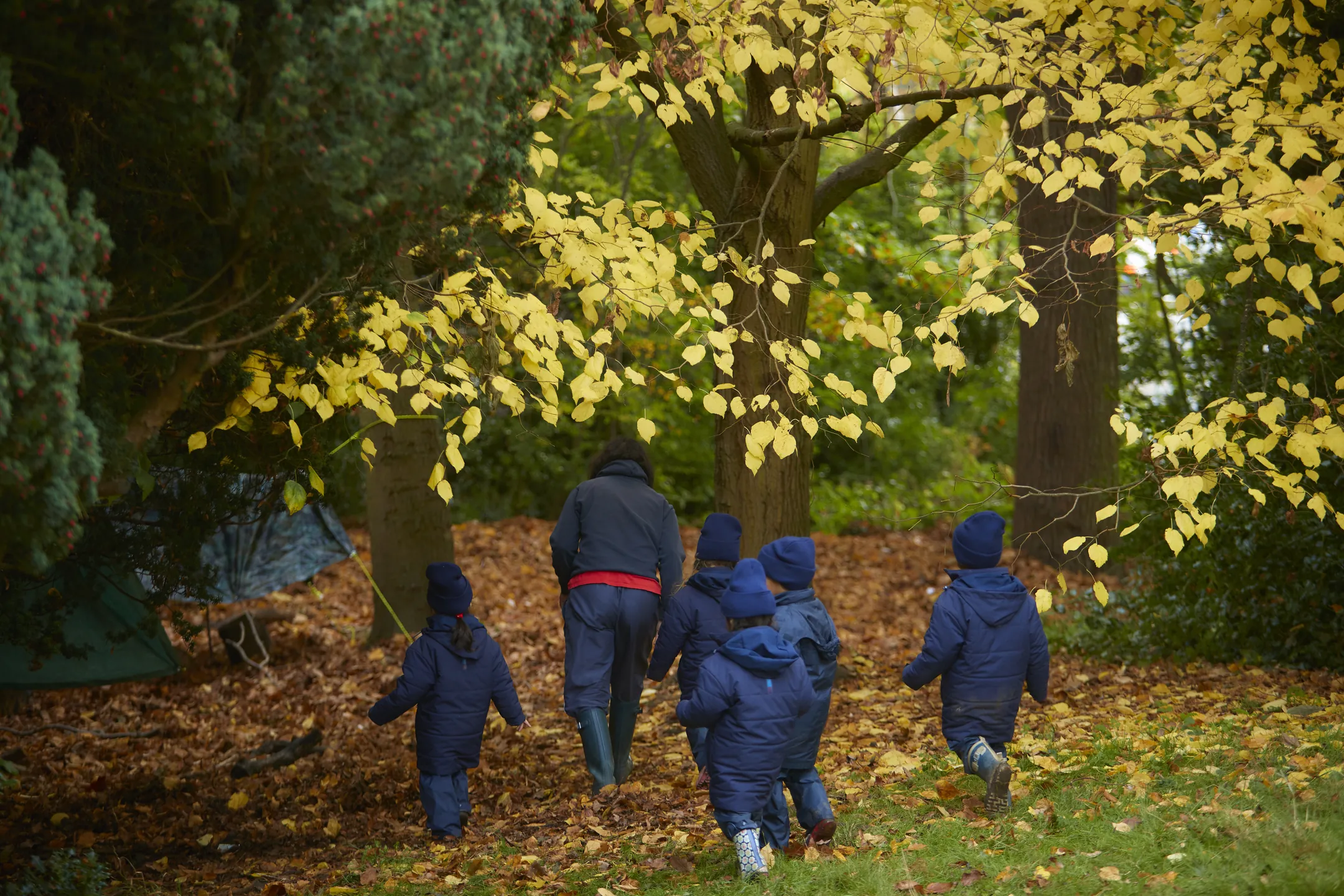
Our unique forest school initiative gives children the opportunity to explore nature, fostering resilience and a profound connection with the natural world around them. These experiences not only enhance their physical skills but also their emotional wellbeing, encouraging a sense of wonder and curiosity.
From Kindergarten to Year 2, each child takes part in a range of child-initiated and teacher-led outdoor tasks and investigations at both our forest school site and the designated outdoor learning area. Nature-based experiences have been linked to reduced stress and improved mental health, providing children with a space to relax and build resilience.
Children will develop their cognitive skills as they problem solve in the outdoors – a fantastic complement to their classroom learning and development of core skills. At the centre of our pupils’ learning, inside or outside the classroom, is a sense of curiosity and nothing stimulates this more than giving children the opportunity to explore the natural world for themselves.
Featured article
Inspiring pupils to care about the world we live in

Through the newly introduced Geography curriculum at Fairfield, Head of Geography, Alex Alves, has positioned a sense of curiosity at the very centre of our pupils’ learning. The sustainable development goals are deeply embedded, and it now has strong links to the local environment, involving more practical fieldwork which is rooted in real life experiences; children are encouraged to develop their thinking and problem-solving skills at every turn.