
The screentime challenge
Building healthy digital habits
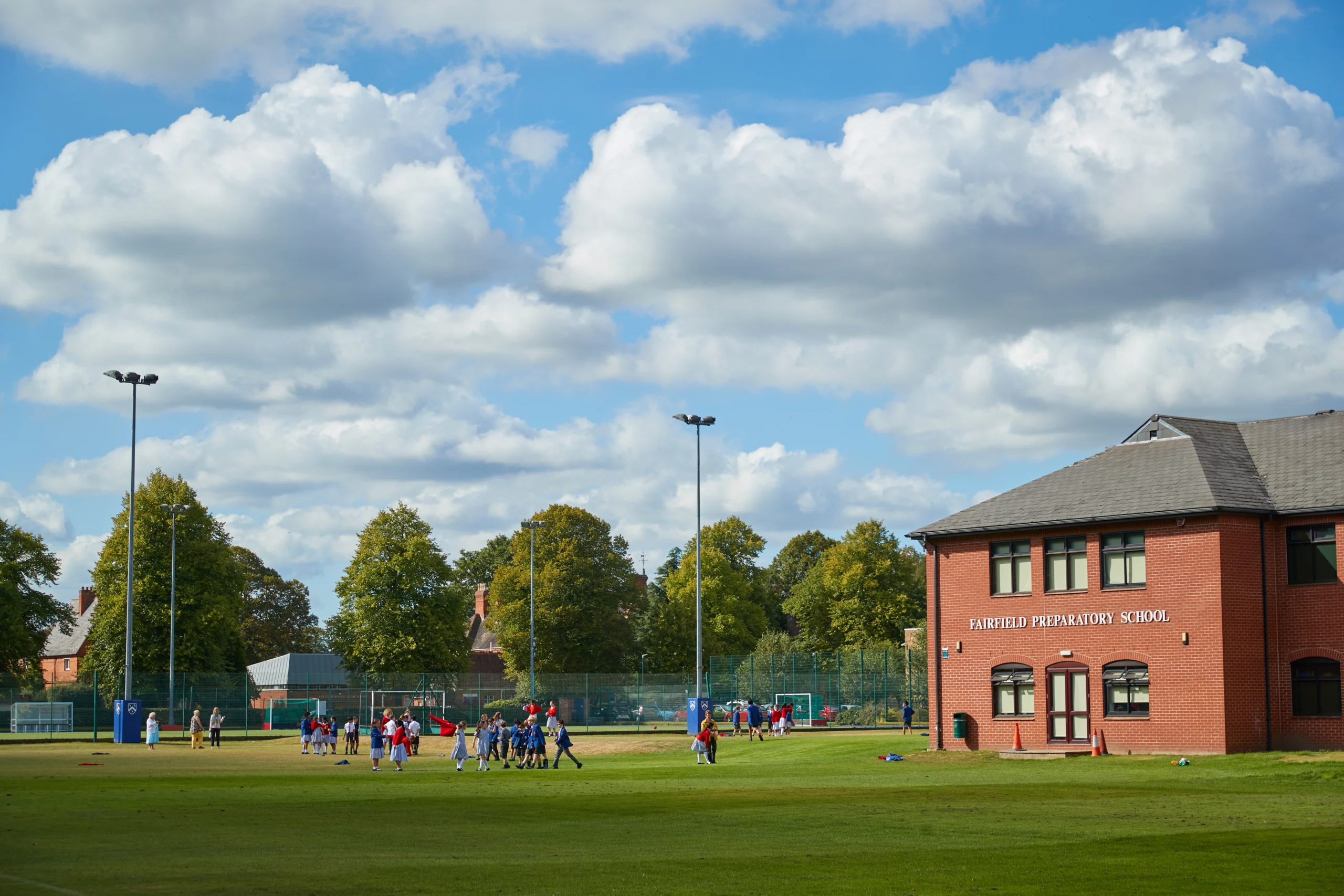
On a crisp autumn morning at Fairfield Prep, I asked our pre-prep pupils a simple question: “What games do you like to play at this time of year?”
The answers came quickly. Mario Kart. Minecraft. A variety of app-based games. Not one child mentioned my childhood favourite of playing conkers under the horse chestnut trees.
Once upon a time, children would spend hours outside, playing tag and hide and seek. Today, many of those moments have been replaced by the glow of a screen.
The shift is not just nostalgic. It raises serious questions about what kind of childhood we are offering our youngest pupils and what this means for their development.
Recent UK research (Ferguson et al, 2025) has found that more than a third of children do not play outdoors after school, and 1 in 5 do not play outside at weekends, highlighting how easily screen-led routines can crowd out the simple, active experiences that once shaped early childhood.
A new kind of childhood
Smartphones and tablets have moved from luxury items to everyday essentials. Many children now have access to a personal device during primary school, with a growing number owning a smartphone by the end of key stage 2. Social media, online games and video apps offer constant, fast-paced entertainment (despite many of these having age limits of 13-plus).
For families, technology can feel unavoidable. Parents rely on devices for logistics, communication and occasional moments of calm at the end of a long day. Children see screens as normal and fun. The challenge is not that technology exists, but that it now occupies so much of the time that used to be filled with outdoor or imaginative play, conversation and rest.
Increasingly, teachers are seeing the impact of this shift in the classroom. Shorter attention spans, difficulty coping with boredom, and the need for immediate gratification are becoming common themes. When we ask pupils to settle to a task that is not instantly rewarding, many find it hard to stay engaged.
The impact on child development
Research is beginning to reflect what many schools are observing in the classroom. A global survey by Cambridge International found that 88% of teachers believe pupils’ attention spans have decreased, with many identifying increased screen exposure as a contributing factor.
Small-scale initiatives reported by the BBC have shown that removing phones from teenagers’ bedrooms can support better sleep routines and reduced anxiety, offering parents a simple starting point for change (see Starr, 2025). Alongside this, organisations such as Ofcom continue to highlight rising device use among children and teenagers and the pressures that constant connectivity can place on sleep, focus and wellbeing.
Findings from this year’s Media use and attitudes report (Ofcom, 2025) show:
- An increase in 3 to 5-year-olds using social media platforms.
- Among 3 to 5-year-olds, 19% have their own mobile phone, rising to 82% of 10 to 12-year-olds.
- Among 3 to 5-year-olds 31% play games online rising to 77% of 10 to 12-year-olds.
- Among 3 to 5-year-olds 85% use any kind of device to go online rising to 100% of 10 to 12-year-olds.
While the evidence is still developing, there is growing agreement that schools and families share a responsibility to help children build healthier digital habits from an early age.
Screen use can crowd out real interaction, disrupt sleep and train the brain to expect novelty and instant gratification. These patterns make it harder for children to sustain attention on demanding tasks. Technology is not inherently negative, but many children’s lives are weighted too heavily towards the screen. Schools have an important role to play in helping to restore equilibrium.
The role of schools
At Loughborough Schools Foundation we educate pupils from nursery to 18, giving us a broad view of how early habits shape adolescence. By the time pupils reach our senior schools, patterns around phone use and online behaviour are well established.
Our senior schools have introduced clear policies. In the Grammar School pupils in years 6 to 9 do not use phones on site. In years 10 and 11 phones may be used in the library after school for learning. Sixth-formers may use phones in designated spaces and are expected to model good habits. At the High School phones are never used, seen or heard during the day.
These boundaries are effective but changing habits at the ages of 11 or 12 is still challenging. We therefore work closely with families in the early years and primary phases to address the issue sooner.
Supporting parents through the early years
For many parents of nursery and infant pupils, the role of screens in day-to-day life is becoming a growing concern. I often meet with families who want to do the right thing but feel unsure about what “normal” looks like or how to set routines that support healthy development. Screens can slip into daily habits very easily, especially in the early years when children are still forming their expectations of the world.
At Fairfield Prep we focus on working alongside parents from the very beginning. These conversations usually start with what we are seeing in the classroom.
Some of our youngest pupils are becoming used to rapid digital stimulation, and I can see how this makes it harder for them to settle to tasks that are not instantly rewarding. This expectation of immediate engagement can shape their early learning behaviours and influence how they respond to quieter or more reflective moments in the school day.
With this in mind, I talk to families about balance. We look together at how screens are being used at home and what small adjustments might help children develop the ability to focus and cope with slower-paced activities.
These discussions are always grounded in child development rather than judgement, and I find that parents appreciate having the space to reflect on what might need to change.
By building this shared understanding, we can help establish routines that strengthen attention and create healthier foundations before habits become more difficult to shift later on.
What schools can do now
Every school community is different, but there are practical steps primary leaders can take to support healthy digital habits.
Audit your own use of technology: Review where and how screens are used in school. Are tablets supporting learning, or are they creeping into lessons as default? Do classroom routines model the balance you want pupils to adopt at home?
Set clear expectations around devices: Consider a firm policy on pupil phones on site, even in primary. Many schools have chosen to prohibit phones completely during the school day, which simplifies expectations for children and parents alike.
Build screen time into your curriculum: Use PSHE, assemblies and other opportunities to explore topics such as online wellbeing, sleep, attention and balanced lifestyles. Help pupils understand not just online safety, but how digital habits affect their bodies and minds.
Offer practical guidance for families: Share simple, evidence-informed guidelines that parents can adapt. These might include delaying smartphones until secondary school, keeping devices downstairs at night, or using basic phones rather than smartphones in the early years of independence.
Celebrate offline activities: Make a deliberate effort to highlight sport, music and outdoor learning. Providing pupils with opportunities for real-world play and movement helps counterbalance the fast-paced nature of digital content.
Create a consistent message with senior schools: Where primary and secondary schools share a site, or work within the same foundation, align your messaging. When parents see that firm phone policies are the norm at 11 to 18, they are more likely to support consistent boundaries earlier on.
Final thoughts
The issue of screen time is not going away. Technology moves faster than regulation, and schools cannot wait for definitive evidence before acting. Primary schools are well placed to lead this work by engaging families early, modelling balance and creating environments where offline childhood thrives.
The aim is not to remove technology but to ensure pupils are ready to use it wisely. By working with parents in the early years we can aim to delay smartphones, limit social media and build healthy routines.
We want pupils to benefit from the digital age without losing the simple experiences of childhood. Sometimes that means encouraging them to put down the controller, step outside and pick up a conker instead.
Andrew Earnshaw is head at Fairfield Prep School, part of the Loughborough Schools Foundation, a family of independent schools in the heart of Leicestershire, offering education from nursery to 18.
Further information & resources
Cambridge International: Navigating the future: Preparing learners to thrive in a changing world, September 2025: https://cambridge.foleon.com/cambridge-international-education/future-ready-learners/
Ferguson et al: The association between park visits, outdoor play and child social-emotional competency in a multi-ethnic, urban cohort,
Wellbeing, Space and Society, Volume 9, 2025: https://doi.org/10.1016/j.wss.2025.100293
Ofcom: Children and parents: Media use and attitudes report, May 2025: www.ofcom.org.uk/media-use-and-attitudes/media-habits-children/children-and-parents-media-use-and-attitudes-report-2025
Starr: Pupils find ‘freedom’ in smartphone experiment, BBC South East, July 2025: www.bbc.com/news/articles/cy8g4zdwnzxo
Written by
Andrew Earnshaw

I was educated at Bacup and Rawtenstall Grammar School in Lancashire and was awarded a degree in Educational and Professional Primary Studies from the University of Lancaster in 1995. Since then, I have accumulated a diverse range of educational experience incorporating the state, independent and overseas sectors.
I was appointed Curriculum Co-Ordinator for PE at Ormskirk C of E Primary School; Curriculum Co-Ordinator for Humanities at the British School, Riyadh, Saudi Arabia and then Curriculum Co-Ordinator for ICT and PE at Seely Junior School, Nottingham.
My next career move saw my appointment as Deputy Head at Beeston Rylands Junior School in January 2004, where responsibilities included Curriculum Co-Ordinator for ICT, PE and PHSE, Educational Visits Co-Ordinator and Newly Qualified Teachers and Student Mentor. I was proud to successfully lead the School to achieve Investors in People status and also gained the National Professional Qualification for Headship from the National College for School Leadership in December 2005.
Following this, my first headship was at Nottingham High Junior School from September 2007 to December 2012. Perhaps testament to my reputation and success in the role was to be awarded the highly coveted “Sunday Times Prep School of the Year” title in 2012.
Since being appointed to Head at Fairfield in January 2013, I have led the school through a period of great change and growth with the completion of an £8-million-pound investment to create state of the art facilities to cater for the growing demand for places in the Pre-Prep and also with the establishment of a centre of excellence for PE and other specialist subjects such as ICT, Science and DT.
I am married to Julie who teaches at the school, and we have two sons who have been through Fairfield and are now at Loughborough Grammar School.
My interests and hobbies are listed as a qualified PADI Open Water Diver, outdoor pursuits enthusiast, competent skier and snow boarder, a keen football, cricket and golf player. Although once a dedicated rugby player who represented the North of England Universities, I have now hung up my rugby boots, preferring the relative sanctuary of Fairfield’s touchlines at which I can be frequently seen cheering on the school’s many successful sports teams.

Sparking a love of science
Science at Fairfield
I have always felt that science is one of the most exciting subjects you can study. It is all about the world around us, so it doesn’t feel like learning something abstract; it feels like learning to make sense of everyday life, and I love sharing that with the children. Hearing their early misconceptions is always fascinating …